Showing posts with label science literacy. Show all posts

Tuesday, December 30, 2008

Fetus' Immune System Halts Attack on Cells from its Mother

Repost from AAAS Science Roundup

Tolerating Maternal Influences

A baby developing in the womb receives vital nutrients from its mother, but also some of her cells. Researchers have long known about such maternal crossover cells, but have been unable to explain why they are able to escape attack by the baby's immune system. In a Report in the 5 Dec 2008 Science, Mold et al. provided new insight into the capabilities of the human fetal immune system. The researchers found that substantial numbers of maternal cells cross the placenta to reside in fetal lymph nodes and that this crossover spurs the baby to produce regulatory T cells -- white blood cells whose job it is to suppress fetal immune responses -- that persist at least until early adulthood.

As noted in an accompanying News story by M. Leslie, the work "suggests a new mechanism for how the human immune system learns to spare the body's own tissues, a tolerance that breaks down in autoimmune diseases." Lead author Jeff Mold discussed the findings in a related podcast interview.

Thursday, December 4, 2008

New Sickle Cell Anemia Treatment discovered

Thanks to hard work, patience, and scientific pursuit of knowledge and application there seems to be New Hope for Sickle-Cell Anemia Sufferers. According to a report in Science Magazine,
Researchers have discovered the molecular switch for activating the fetal form of hemoglobin—the iron-containing protein in red blood cells that transports oxygen—which could help alleviate the symptoms of genetic blood disorders, including sickle-cell anemia.

Sickle anemia is widely regarded as a Black disease because it affects an estimated 70,000 people (mostly African-Americans) in the U.S. But it in fact peoples from many regions of the world have high incidences of this disease in their populations: Africa, Mediterranean countries (such as Greece, Turkey, and Italy), The Arabian peninsula, India, and Latin America (such as South America, Central America, and parts of the Caribbean).

Sickle-cell anemia can be fatal with most people dying by their mid-40s. When I was a young child, persons with sickle-cell anemia had a life expectancy of 25. Thank goodness for modern medicine. However, it is a high-maintenance disease. Sufferers deal with extreme pain in the legs when their red blood cells sickle and prevent a constant flow of oxygenated blood. Many take blood thinners or have frequent blood transfusions to stem the symptoms. This new treatment technique may by-pass all of that. Inherited forms of anemia may soon be treated by turning on a gene normally active only in the womb, when individuals with sickle cell anemia are asymptomatic. Read more about this new discovery at Scientific American.

Wednesday, October 29, 2008

Science Vocab: Heritability

Here’s a pop quiz. Read the following statements and select the best answer from the choices below.

A: Snoring runs in my family; it is genetic.
B: Snoring runs in my family; it is heritable.


1. Statement A is true
2. Statement B is true
3. Both Statement A and B are true
4. Neither Statement A or B are true
5. Don’t know


The answer: Only Statement B can be true. Heritability deals with the likelihood or probability of traits running in families. But here is the catch: something can be heritable due to genetics or environment. In this case the environment includes culture or habits and behaviors that you experience and accept as a normal and everyday. Everything that shared among related individuals isn’t necessarily because they share the same genes.

Here’s another snag – heritable traits and inherited traits are not synonymous. To inherit something means you received it or get from your parents. Think about an heirloom. Your grandfather has this amazing fishing pole. When he passes on, he gives the fishing pole to your father and your father gives it to you. You get the exact same thing your father and grandfather had. Genetic inheritance works the same way. One parent has a gene or allele and he or she gives to you.

Heritability is the likelihood of getting something…in other words, you might get it. It’s not automatic – like genetic inheritance, but the chances look good.

Here’s an example: Autism: highly heritable but not inherited
Arthur L Beaudet of Baylor University examined genetic causes of Autism. He found specific gene disorders that can result in autism de novo, automatically or off the top. These disorders include an alteration of the genome causing complete loss of copy, gain of copy or disruption of a dosage-sensitive gene.

But research by Sebat et al. indicates that other genomic deletions and duplications may point to genes in which mutations may lead to autism, but doesn’t automatically cause autism. In other words, having these genes doesn’t mean you will automatically have autism, but your chances are high.

Thinking about human behavior and habits, many of us confuse genetic and cultural heritability, especially when comparing family members to one another. If it’s something positive like – good looks or being smart, then it is thought to be an asset. You feel like you’ve got the deck stacked in your favor. "Natural with no extensions. She get it from her mama."


But all too often we hear people say unpleasant and hurtful things and characterize failure as a family curse. For example, making bad grades or getting into trouble. “You get that bad behavior from your father”. The good news is that these behaviors are NOT genetic, not ingrained in that person. The similarity is coincidental or because of a habit. Habits can be changed. Genes cannot.

Monday, October 27, 2008

Affirmed - McCain/Palin are Anti-science.

First McCain put his foot in the mouth at Debate #1 about the Grizzly Bears.

Correction - The money spent on this genetics and conservation research project was not an earmark. It was a awarded as a competitive grant and help shed light on an endangered species - a native American species- and apex predator.

Next McCain sounded like a foolish old man comparing the Zeiss Projector at the historic Aldler Museum of Chicago to an overhead projector in Debates #2 and #3.

Correction - the projector projects images of the night sky and space onto a domed ceiling in the Sky Theater. Adler is the Western Hemisphere's oldest Planetarium. They educate and inspire millions. For decades children of Chicago, the state of Illinois, and the US are have been provided top-notch space and planetary sciences education and career exploration opportunities. In fact, the Adler has educated Navy men in night sky navigation to help them chart their courses while out at sea. The stars of the night sky are their only landmarks. The Navy, the US Navy. Hmm, should Mr. Naval Academy know how important the Adler is...Maybe he would if he hadn't been such a bad boy in college and graduated near the bottom of the class.

Last, Mrs. Palin talked about a "ridiculous pet project research on fruit flies in Paris", just moments after declaring her commitment to families with special needs childrend and disabled family members. Palin, autism and fruitflies - it does not add up

Correction - 1st, the research which as she correctly stated was paid for by NSF was actually conducted in the United States! And this research with fruit flies has made discoveries about genes and proteins related to Autism Spectrum disorders! Foot in the mouth.
UNC scientists comment in support of fruit fly research for understanding autism

McCain-Palin just seem so under-informed and unapologetically ignorant about science, science education, science outreach, and research. It bothers me to potentially have another adminstration that marginalizes science as a meaningful endeavor and politicizes research results, ignoring sound advise when making important policy decisions.

Having a President (and Vice President) who are scientifically literate matters.
AVoteForScience: Kiki Sanford endorses Barack Obama

Hat tip to Bora (A Blog Around the Clock) for links with the great videos. Be sure to check them out. Very informative.

Science Literacy Matters.
Vote Pro-Science and Pro-Education

Thursday, October 9, 2008

Science Nobel Prize Winners Announced

I know the US Political Theatre has most of us wide mouth. But the world of science and discovery is steady at the helm. The Nobel Foundation has named its 2008 winners in the science categories.

Doctors Osamu Shimomura, Martin Chalfie, and Roger Tsien share The Nobel Prize in Chemistry for their discoveries of the green florescent protein in jellyfish
Here’s what they did.


Doctors Yoichiro Nambu, Makoto Kobayashi, and Toshihide Masukawa share The Nobel Prize for Physics for their discoveries of broken symmetry dynamics. Don’t even ask me what this means. I understand the chemistry and physiology/medicine award. I need to go back to school to figure this out. But nonetheless it’s important. Bone up, read about it here.

Doctors Francoise Barre-Sinoussi, Luc Montagnier and Harald zur Hausen share The Nobel Prize in Physiology or Medicine – the discoverers of the Human Papilloma virus and the HIV Virus . By the way this award is for most any life science discipline. Dr. Robert Gallo also did some key research on the HIV virus wasn’t co-award the prize. Science Drama.

Go to Happy Hours this weekend and impress the socks off of everyone. For good measure throw in some chatter about the folks throughout history who were worthy but did not get the award. The most notable un-awardee is perhaps Rosalind Franklin who did all of the real work that Watson &Crick are now famous for. Coincidentally her research work cost her her life.

Wednesday, October 1, 2008

Presidential Candidates Stand on Science

The other day, I blogged about the Presidential Candidates’ stands on science. STEM is the foundation of this nation’s prowess, security, and success. Therefore sound science policies and developing other policies with sound science and advice is terribly important.


Too bad there won't be a 4th Presidential Debate that's all about Science and Education. But we've got the next best thing - ScienceDebate2008. It is an online forum where the candidates provided answers to 14 key Science questions. The goal is to raise public awareness of science, technology, and innovation and call attention to informed decision-making at higher political levels. You can read their answers and offer comments and offer new questions.
I am biased (I support Obama), but my first response to the candidates side-by-side answers is that the two definitely see science differently.

Obama details his interests and comprehension of the importance of the STEM pipeline. He proposes funding science & math education from K-12 through graduate education and early career research grants. He focuses on supporting science through agencies like the National Science Foundation.

McCain doesn’t even mention a single science agency and all of his focus is on technology and entrepreneurship. Basic research happens at colleges adn universities and through scientific agencies like NSF, NASA, and NIMH. Business innovation of technology and discovery takes place AFTER graduate students and post-docs work out all of the kinks. I am disturbed by McCain’s limited comprehension STEM and its work culture. He completely disregards the role of academics in science research, and it makes him seem so out of touch. He complete focuses on tech-related industries (I guess because of the potential for entrepreneurship) and ignore the basic sciences such as life sciences and physical sciences. And I’m still sore about the comment about science research being a wasteful pork earmark.

Let me share something with you all. The ability to get federal research money for science is based on a very strict, very competitive peer-reviewed system. You have to write a detailed grant explaining why you want the money and the impact the research/results will have on the world. Science is about knowledge – gaining knowledge, clarifying information, and disseminating knowledge. Even great ideas that might possibly change the world get denied because of lack of impact. Getting research money is no easy task. Even for my graduate-level research monies I had to jump through several hoops. No one passes this money out. There is no special money set aside for pet science projects –of any kind. Everyone must compete and demonstrate professional ability before any money is granted.


Update: From Campaign News from AAAS Policy Alert Newsletter.
On Sept. 26 the Obama campaign released a revised plan for science, technology, and innovation and a letter signed by 61 Nobel Prize-winning scientists who have endorsed Obama. On Sept. 29 Senator McCain released a radio ad reinforcing his past record on stem cell research and calling an Obama ad claiming that he has "stood in the way" of stem cell research "misleading." And in a speech last week at the Clinton Global Initiative, McCain reiterated his commitment to addressing global warming.

Stay informed!
I can’t wait for the VP Debate tomorrow.

Sunday, September 28, 2008

Presidential Debate 1: McCain on Science


The Scientific Research and Ecology circles are not at all happy with the glib comments made by Presidential Candidate John McCain about DNA research on Bears being pork spending and wasteful. When I was live blogging with Pam during the debate, I was livid to hear that.

He really drew a line in the sand with the science community. How dare he look down on SCIENCE? The subject and field were this nation is slipping steadily behind. But as I learned in ECOLOG, an e-community list serve maintained by the Ecological Society of America, McCain has been “joking” about this Bear Research being a waste. In fact, Scientific American published an article back in February 2008 McCain's Beef with Bears?—Pork.

First of all, scientific research like this is NOT pork or a special earmark. The Scientific and Education communities would be so lucky to have some guaranteed funding for these important lines of work. But I digress. Second, the study is very important and worth every penny. Grizzly Bears are federally endangered (listed in 1975) and research is necessary in order to understand the species and save it from extinction. "This is not pork barrel at all," says Richard Mace, a research biologist with Montana Fish, Wildlife & Parks (FWP). "We have a federal law called the Endangered Species Act and [under this law] the federal government is supposed to help identify and conserve threatened species."

His remarks and regards don’t really surprise me; and I’ve not been secretive about my support for Obama. Check out McCain’s and Obama’s answers to the Science Debate 2008 14 Questions about Science Policy.

STEM is far too important, our nation’s children score poorly in science and math, far too many young people shy away from these subjects in college, and most American adults are scientific illiterate to shoot scientific research down as a waste of time and money. The time of ant-intellectualism and anti-education must end. NOW!

Monday, September 22, 2008

Science Vocab: Thrifty Genes


The other day, I hinted about my struggle with weight. Carrying extra weight is not healthy, but for some people shedding pounds is a challenge. It is for me. I blame my thrifty genes for some of my struggles.

The Thrifty Gene Hypothesis was first presented in the 1960's. It basically says that the among some ethnicities, their genes for metabolism work differently.
People from ethnic groups like Africans, Native Americans, and Polynesians evolved in areas where there were routine food shortages, due to extended dry seasons or cyclic famines.
Those individuals who carried a little extra fat -- in the hips, stomach, thighs or where ever --survived hungry times better. They carried more fat because of how their bodies metabolized carbs. Instead of burning it all off, their metabolisms were frugal or thrifty, burning less energy and storing more of it as fat.
I personally think the term Thrifty Genes isn't the best description. I prefer Famine-Resistance Body Type.

Fast-forward to the pro-industrial age.
We definitely have a more sedentary lifestyle than our ancestors. We put less energy into farming, chasing down game, gathering food, and preparing and cooking food.
Also, food is more regularly available - in the Industrialized world, fewer chances of famine and food shortages.
We also have a lot of processed, high carb, high sugar foods - more caloric-bang for the portion size. Those of us who have ancestors who successfully lived in these harsher conditions, but inherited their "good famine-resistant genes" are now at a disadvantage. Our genes and physiology are pre-programed - save more, burn less and there is little we can about it - other than eat differently and exercise more.

This hypothesis is presented as plausible, though not definitive, explanation for why African-Americans, Native-Americans, and Polynesian peoples have a higher propensity for weight issues and health problems like diabetes and heart diseases.

Tuesday, August 19, 2008

State of Science Education Today

Below is a letter to Members of the American Association for the Advancement of Science (AAAS) about the State of Science Education: The Education of Future Scientists by Dr. Alan Leshner, CEO of the largest professional society of physical & natural scientists, engineers, and social scientists.

Sciene and Science Education are important. Segments of society that are under-educated in science and math will not be able to fully participate (and advocate for themselves) in 21st century dynamics. Our health, food supply, living situations, medical care and even job opportunties are becoming more sophisticated and steeped in science, technology, engineering and math (STEM) advancement.

******************************

We are living in a time when science and technology are embedded in every aspect of modern life, and therefore we must make sure that all students have familiarity with and a strong grounding in the nature of science and its core concepts. In addition, to assure a future of continuing scientific innovation, educators must continue to draw talented students into the science profession.

AAAS has had an array of direct impacts on how science is taught through our
Project 2061, which laid the groundwork for science education standards, created benchmarks for science literacy, and has ongoing efforts to reform curriculum, instruction, and assessment. A Japanese translation of educational concepts for science literacy, workshops for teachers on how to use our Atlas of Science Literacy, and a field test of assessment tools for use in middle school classrooms are a few examples of Project 2061's recent efforts.

We further promote quality science education through
Science NetLinks and its nearly 500 complete standards-based science lessons -- all freely accessible on the web. We engage budding scientists with radio programs, weekly online stories, events for families, and our Kinetic City after-school program. AAAS also recently helped create new science, mathematics, and technology resources for elected school board members across the United States. In addition, 48 middle-grade science and math teachers in Washington, D.C., recently earned master's degrees from The George Washington University in a free, three-year program held at AAAS.

But promoting science literacy and quality education is not enough to guarantee a new crop of professional scientists. We also must educate students about science career opportunities. AAAS has programs to help underrepresented minorities and students with disabilities enter the science work force. In addition, our
Science Careers website is the most comprehensive resource for career advice and job openings.

Your AAAS membership helps improve science education. And many of you also share your scientific expertise by getting involved with local schools and youth groups, and by becoming mentors to the future's scientists. Many thanks for your participation and your support.

Sincerely,

Alan I. Leshner, CEO, AAAS

Saturday, August 16, 2008

Science Vocab: Sexual Selection

Sexual Selection is the umbrella term for all of those natural forces that influence and shape animal sexual and reproductive habits and outcomes. It is a sub-set of natural selection that deals with one and only theme – SEX. Biologically speaking, you’re only a winner if you successfully reproduce and the one who leaves the most number of healthy and viable offspring.

The truth is there is much similarity between human social behavior and that of our other animal kingdom cousins. This seems especially true when I think about mating behaviors (courtship, sex, and relationship habits). I have read several papers on the subject of sexual selections and thought to myself … “Dang, that sounds an awful lot like the relationship games people play.” And what’s more, you probably know (and act out) a lot more about sexual selection than you ever realized.


Related terms: Intra-sexual Selection and Inter-sexual Selection

Intra means within, in this case the competition of members of the same-sex to get the attentions and affections of an opposite sex mate. Typically, males of the species are the focus of scientific studies of intra-sexual selection. Think back to your science lessons or National Geographic Specials…..
Two male rams, broad and large in size, with impressive horns on their heads are stalking and sizing each other up, then they bolt in a run and Clash! Bump heads with one another. It continues until a winner is determined. The prize: the chance to mate with the female goats and sire the offspring of next season. But there is also female-female competition, but it usually less dramatic.

Inter means between, in this case how the sexes choose one another. In the case of our National Geographic rams, the female goats can decide they like the winner or the loser of the battle or some other male altogether.

So what about us…
Imagine the scene… A night club, music is hot the dance floor is crowded, lots of lovely people in the house. A group of guys are hanging out together and they spot a group of girlfriends kicking it too. Assuming everyone is available for dating here’s what’s happening….

Intra-sexual Selection: The guys, though friends, are all trying to figure out which one of them will probably step up first and what type of game he’ll put down. And these guys are competing with every other guy in the club, too – not just their friends. You’ve got to figure out if it’s worth it and when to step up, check your breath, your wallet, and your rap. The Ladies are doing the same thing and in this case comparing themselves (physically) to every woman in club – adjusting herself, checking makeup, etc. The signals she sends matters and the signals other women send matter. It’s not a big push-and-shove, but it’s a jungle out there.
Basically each person is competing, whether directly or indirectly with every other person in the club of the same sex. Basically, everyone is hoping to get noticed or make eye-contact, share a glance and a conversation that might lead to more.

Inter-sexual Selection:
After all of the posing and posturing and adjusting you finally step to that guy or girl. You chose them, but will they choose you…or ask about your friend? That’s inter-sexual selection.

From now on, I’ll routinely share more science info about Sexual Selection and related vocabulary.

Wednesday, June 25, 2008

Science Vocab: Nanotechnology

Simply put it is tiny technology – very tiny, in the nanoscale. Basically it is tiny machines and even computers at the molecular level.


A recent paper in Science explains how bacteria with flagella (those little whips, think to the might Euglena from your Biology class, or one better, sperm) move and stop.

The flagella attaches to the base of the bacteria and is engaged by a clutch device. Yes, just like your stick shift car. To stop the bacteria releases a protein that disengages the clutch from the engine and that’s how bacteria stop moving.

No talk of the exact applications, but my creative mind is racing – medicine delivery, micro-mechanics, etc. Read the complete story. Microscopic "Clutch" Puts Flagellum in Neutral.
Nanotechnology and Biotechnology, the umbrella field, are exciting and promising field of life sciences, engineering, physics, and medicine rolled all into one. And Biotechnology is perhaps the fastest growing science-related job field. And technicians are needed to move research and innovation along. Though typically, science professionals possess higher degrees, many technical work levels don’t require college degrees. Lots of career and job growth...
However, a post-secondary education is needed, usually at the associate' or community college level, and the pay potential is great. Here are great career opportunities, but a firm foundation in science and math is needed in order to take advantage of these opportunities.

Wednesday, May 14, 2008

The Importance of Scientific Literacy

The 21st century is fast-paced and highly competitive. Each day, we make important decisions that will greatly impact our lives today and well into the future. Moreover, we are provided greater amounts of increasingly complex information that ever before. However, our society’s collective sense of science literacy is outdated; many people still think of science literacy as simply being informed about new advances, for example in medicine and technology. This definition of scientific literacy will not longer suffice in this new Information Age. As the media shares new information about scientific, medical, or ecological breakthroughs, we are expected to respond to this new information. What will we do with this information? How will our lives be affected by the decisions we make?

In this new century science literacy is the occupational capacity to apply information in an appropriate contest, to analyze information, to synthesize information from various sources or on various topics, and evaluate information to determine the best course of action. Essentially, being scientifically literate in the 21st century means understanding the nature of science as a process that helps us discriminate between what is real or likely and what is not. It is the comprehension of the nature of our minds, our bodies, and our environment. It is using that knowledge to make the best decisions possible for ourselves, our families, and our community – now and for future generations.

This type of literacy is valuable because it cultivates the intellectual development of the individual. Science the close observation and examination of the natural world, analyzing information and sources of information, interpreting events, and making decisions based on these observations or conclusions made by others. Quality science education equips students (of any age) with the tools to direct one’s own learning. The individual can make his or her own discoveries, create new knowledge, and apply information and resolve discrepancies on his or her own. By studying and doing science, an individual is transformed from a passive recipient of information to an active and discerning consumer of information. In other words, scientific literacy is valuable because it prepares and empowers us to become more actively engaged in the decisions we make in out lives.

However, I am surprised by the decisions some people make because they posses a depth of misunderstanding about scientifically related topics. For example, I have met many people, some with college educations, who have decided not to participate in research activities because they were certain the doctors or psychologists would deliberately harm them. I’ve known people who have refused to donate blood or become an organ donor because they honesty believed doing so would put them at risk. Moreover, I have heard people share explanations for natural phenomena, such as disease transmission and reproductive health, which were grossly inaccurate. And more recently, I have read people’s angry comments about waste treatment or genetically modified plants, that were completely void of any comprehension of the these technologies. Some of these misconceptions and misunderstandings are so strongly-held that most people do not abandon their own explanations even when they have the opportunity to discuss the matter with scientists, doctors, or other experts. These inaccurate explanations have been accepted as truths for so long and so deeply that a single brief conversation (or blog comment) is not enough for people to update their memory banks or even have them open up their minds to the possibility of alternative explanations.

It is imperative that people have an accurate understanding f our bodies, our health, and our environment. Helping people engage in more meaningful discourse (in general and) about science-related topics is the first step to creating a more scientifically literate society. I think it is especially important to educate the most vulnerable citizens in our society, e.g. the poor, the undereducated, the marginalized and disenfranchised. A society’s most vulnerable citizenry are those who do not know how to critically evaluate the options or the validity of a source and are ignorant to the resources available to them. Individuals who are well-informed and discerning are less likely to be victims of social injustice or environmental racism. Being better educated makes us better advocates. When we become advocate or activist-citizens we hold our elected officials and service providers and each other accountable.

Tuesday, May 13, 2008

Comprehending science and the rest of the world

Ever so often I am reminded of how insularized I am as a Scientist. It's not until I hear or read people's responses to events that I come to appreciate how overwhelmingly uniformed many people are. I find myself fighting the urge to remark - "You are one dumb ass. You didn't know that's how it worked?"

And no, they obviously didn't, so why be mean. I readjust my face, but my thoughts still linger on. As noted by many, and I last read on Black Snob's page, Black people don't hold the market on anti-illectualism, it is a pandemic problem. But I am especially pained when I hear or read about people just going on and on about a topic and they have no real information to offer. And I see people just ranting and chanting on in support. Are people that attuned to sensationalism? I keep waiting for them to say something substantial or make a point or offer some evidence. I'm thinking "yeah, and..." But most every one else is caught up, carrying the banner, and cheering in thunderous applause.

Then, I am reminded of how important FRAMING is to science -- or any topic for that matter. Do we only respond when something shocks us, or disgusts us or frightens us? And the answer I'm arriving at is Yes. Most people are just waiting for someone, some authority, some preacher or activist - a charismatic soapboxer I call them - to tell them that something is a problem and that they ought to be disgusted and even scripts them on how to respond. For example, a posting on WOAD where the author had to tell people that they don't need her approval to tell them something is disgusting and illegal and to report it to the proper authorities.
I blame it on Tavis and investigative news reporters. They've done all of the research and work and now they package it up for us with an emotional spin "Oh Black Folk, you gonna get mad when I tell you this." Right there, they've set us up to expect to hear something disappointing; we're riled up.
What about balance or encouraging people to make up their own minds - to be discerning? So what happens when we are just given the information, evidence, balanced interpretations, and contexts? Do we engage in thoughtful discourse then? No, most people still walk away only remembering and quoting that which supported their original positions.

I find myself frustrated, because a meaningful dialogue still hasn't occurred. There hasn't been a vetting - of the source or the information. And then I'm back to where I started...I'm not like everyone else, at least not when it comes to certain information. Am I better-read or more exposed to things compared to the general public? Yes, I am, particularly about topics that relate to science or research or the environment. That's because I'm immersed in the information. I know about many advances in life sciences 1-5 years before the general public. That's because I go to conferences and I know scientists. I get the scoop before things go to press; sometimes I get the scoop before the entire experiment is complete. Plus, I've read ALOT of papers and textbooks, so I'm aware of all of the nuances and exceptions. So it's easier for someone like me to not respond so eagerly to dramatic information. It's likely old news for me. But on the flip side I'll admit that I'm a buffoon about economics and markets. I mean I can add and subtract. I watch or listen to the general news...But read the Wall Street Journal or watch the Bloomberg Report. What are those damned letters racing across the screen at different speeds? I digress.

The rest of this week's posts will explore the the importance and challenges of sharing science with the general public.
Stay tuned.

Friday, May 9, 2008

Weekly Science Update - Breakthroughs in Evolution

I like how the New York Times, the LA Times and USA Today, and even Yahoo! News each has a science section and it includes stories about ecology, nature, health, medicine, even science-society intersections. Why haven’t Black Media outlets done the same? Well, until it happens, I’ll continue posting important and interesting information about science and research. Think of it as supplemental News. The weekly science update labels are a quick way to see what’s new in Science and Research. And if you don’t listen to NPR Science Friday -- you may be even further behind than I think -- here is your Crib Sheet for Cocktail party talk this weekend. Both are rather quick reads. So scan through them quickly impress everyone with your knowledge of evolutionary theory over drinks. This week’s theme – EVOLUTION.

Platypus Genome Decoded Yes, this is a big deal. Okay not the “how does this apply to me” kind of way. But it’s a big deal to evolutionary and conservation geneticists/biologists. Yes, the freaky looking platypus’ genome has been figured out. And yes, it confirms what every elementary kid thought when they first are introduced to this animal - Platypus DNA is a combination of reptiles, birds and mammals; but in the most evolutionarily delicious way. Check out the story.

Ancient "Nutcracker Man" Challenges Ideas on Evolution of Human Diet Short and sweet – Anthropologists examined the tooth wear and food residuals of early hominid teeth. Usually dental paleontologist use ancient teeth to hypothesize what animals could eat. Because of this hominid’s tooth, cheek, and skull structure, plus the tell-tale wear on the teeth, they surmised that these early humans were well-suited for eating nuts and fruits with hard shells. But thanks to better digital and electronic imaging technology that can take a closer look at the teeth and determine what they actually ate (or more likely to have actually eaten). Neat, huh?

Oh, and don’t forget my prior posting on Human origins in Africa are derived from 2 lines.

Knock ‘em out.

Wednesday, May 7, 2008

Free Signed Book Contest

This is something that tends to do very well among most blog readers, especially among AfroSphere bloggers and readers - Free Book Contest.


Carl Zimmer is a popular science writer who writes for the New York Times and several magazines.
His recent book Microcosm: E. coli and the New Science of Life is now on sale but he's actually giving away a signed copy of his book. I'd like for one of my readers to get a shot at winning this book. All you have to do is visit his blog and ask a question about E. coli - the subject of the book.


Editorial Reviews of the book From Publishers Weekly
When most readers hear the words E. coli, they think tainted hamburger or toxic spinach. Noted science writer Zimmer says there are in fact many different strains of E. coli, some coexisting quite happily with us in our digestive tracts. These rod-shaped bacteria were among the first organisms to have their genome mapped, and today they are the toolbox of the genetic engineering industry and even of high school scientists. Zimmer explains that by scrutinizing the bacteria's genome, scientists have discovered that genes can jump from one species to another and how virus DNA has become tightly intertwined with the genes of living creatures all the way up the tree of life to humans. Studying starving E. coli has taught us about how our own cells age. Advocates of intelligent design often produce the E. coli flagellum as Exhibit A, but the author shows how new research has shed light on the possible evolutionary arc of the flagellum. Zimmer devotes a chapter to the ethical debates surrounding genetic engineering. Written in elegant, even poetic prose, Zimmer's well-crafted exploration should be required reading for all well-educated readers.
(May 6) Copyright © Reed Business Information, a division of Reed Elsevier Inc. All rights reserved.

"Written in elegant, even poetic prose, Zimmer's well-crafted exploration should be required reading for all well-educated readers."--Publishers Weekly

Good luck.

Sunday, May 4, 2008

Government Funded Research on African-American Children - Math & Science Scores improve


The Good News: The Achievement Gap in Math and Science is closing between both African-American and Hispanic students and white students in elementary school math, and between African-American and white students in elementary and middle-school science.

This is Government funded/sponsored research and it is your tax money at work (US citizens). In light of the dialogue concerning the sewer study in black neighborhoods, I realize there is a huge misunderstanding about government funding research. I hope to set the record straight. Most of our nation's (and most other nations, too) science, technological, and engineering innovations are funded with public money. The National Science Foundation, the Department of Energy, the National Institutes of Health, the National Institute of Mental Health, Centers for Disease Control, and even the Smithsonian Institute are all major funders of STEM research. Private foundations also leverage funds to researchers.

Though each organization has its own forms to fill out and hoops to jump through, all pretty much have the same process.

1. Organizations ANNOUNCE the availability of funds for research. The Agency announces funds are available and each major program (discipline related) get so much of the pie. Not every program gets the same amount of money (that's a completely different topic to tackle). Let's take the field of Engineering for example - program divisions would be Materials Engineering, Electrical Engineering, Air and Transportation Engineering, and so on.

2. Researchers (most often from colleges or universities) survey their portfolio of research and see if they are doing something that might fit the bill. Researchers are often college professors (faculty) who have earned doctorate degrees in their field of study. Researchers train graduate students (those pursuing master's and doctorate degrees), so they can apply for and use this money, too. Sometimes, there are special funds set aside ONLY for students, faculty cannot apply.

3. Researchers write a proposal for the money (a grant) that outlines what type of research they are doing (or will do) and how they will use that money. Grant writing is a long and grueling process - sometimes. Essentially, you are writing a research proposal to be evaluated by the most critical and qualified people in your field. There is way too much money on the line to just give it to someone who has a neat idea, but doesn't have the ability, capability or proven track record to get things done.

4. In exchange for the money the researchers must adhere to all legal boundaries (state, federal, and professional) as well as ethical boundaries. These are also considered in the grant proposal. Any red flags and a researcher has to re-do the whole proposal or sometimes is disqualified from funding for that round. Researchers are also expected to disseminate results - not only to other professionals in his/her field, but to the public as well. Why? Because the public paid for it. Also, this new information is knowledge designed to enhance/enrich our lives. Others (practitioners, students, and other researchers) can use this information to make decisions about policy, their lives, business, pursue future research, etc.

The story above is such as example. And can't you just imagine the many applications of this finding and the study itself informing struggling school districts? So, to clarify, government sponsored funding is typically how most research is funded AND it isn't designed to take advantage of any group of citizen. It is a very critical process and though the jargon can be overwhelming to non-scientist/engineering, it is open and subject ot public scrutiny.

Stay informed.

Monday, April 28, 2008

The Science of the Sewer Study in Poor Black Neighborhoods

In response to the dialogue about this case, I have added some links that are a follow-up. Specifically, I want to address the science or scientific processes involved in this type of research. Here is the SOIL COMPOST STUDY TO REDUCE LEAD HAZARD FACT SHEET.

Here is the abstract or summary of the research experiment. The study was published in the peer-reviewed journal Science of the Total Environment. The journal is an international medium for publication of original research on the environment with emphasis on changes caused by human activities. It is concerned with changes in the natural levels and distribution of chemical elements and their compounds that may affect the well-being of the living world, or represent a threat to human health. Papers in applied environmental chemistry and environmental health sciences are particularly encouraged. This study falls well within the purview of this publication.

I do understand the environmental justice concerns of this research specifically with this research group, as noted by Francis Holland. I'm not dismissing his or others concerns. However, I think it is important that those who are most vocal about this issue demonstrate a basic comprehension of how this type of research is conducted and what this study found.

Let me break a few more things down.
In addition to Institutional Review Boards (see note in previous post), the peer-review process is another stop-gap for making sure appropriate procedures and ethical measures are followed in research. Research that is believed to be problematic is investigated and not permitted to be published. There are also number of professional reprimands for researchers are proven to be unethical or inappropriate when researching or reporting results.

The Abstract - rewritten
High lead concentrations in urban industrial areas are a big problem and can cause many health problems in people, but there is no one program to get rid of lead in soils, unless it is a big nasty spill from a company or factory. So there are many people who are exposed to lead in soil, but there is no feasible and affordable solution at hand. The researchers selected lawns in contaminated neighborhoods where the ground contained a fairly high concentration of lead which can get into the human and animal body systems. They used a commercially comparable compost, organic material from animals, that contained a fairly high concentration of iron and phosphate, and spread it over the lawns. Iron and phosphate can grab the lead in the soil and keep it from getting into the body system of people and animals. Iron and phosphate are also great fertilizers to improve the health and appearance of lawns.

The lawns were tilled, or dug up, and the compost was applied. They sampled the soil in the lawn several times to compare the levels of lead in the soil in various locations in the yard (near to the home vs farther away from the home) and many times over the course of the year. They compared the level of lead before the compost was applied and many times after the application.
At the end of the experiment, the lead concentration that can get into the body was much lower. The lower concentration of lead was more notable at areas closer to the home, where the risk of picking up lead was higher. At the more distant parts of the lawn, the treatment didn't lower the lead concentrations much, but there was always a lower concentration of risky lead in those parts of the yard. Plus, the lawns were healthier and more attractive at the end of the study. This research met its objective of finding a possible and feasible way of reducing lead in soil without having to dig up the whole yard and discard of the contaminated dirt in some undetermined place. This research is particularly important because it may provide an affordable solution to reducing lead poisoning risk in children.

Sunday, April 27, 2008

Sewer Study in Poor Black Neighborhoods - Good Science or Bad Policy?

Recently, some media outlets have cried a possible foul against the scientific research community concerning a study that fertilized lawns with human and industrial waste as possible remediation to lead poisoning. NPR News & Notes featured a piece about Scientists Under Fire for Sewage Sludge Study. Francis Holland ranted about it too on American Journal of Color Arousal. Study participants were all Black and lived in poor urban neighborhoods. Since this research is 'government funded' some are asking whether these participants were intentionally targeted and if the government is 'deliberately experimenting on vulnerable citizens'.

I realize that the black community is still untrusting of scientists and science research. And this issue has several groups like the NAACP up in arms claiming Tuskegee type issues. What is the main problem? That the recent research was done in those neighborhoods or that the research was done and people were harmed? If people were harmed AND they were not fully alerted to the dangers (I doubt that) AND they were not treated AND the incident was swept under the rug, then there is a point and the anger is justified. But according to the press stories none of these scenarios seem to be the case.

It seems the matter of research can’t be addressed objectively among the Black community because of the sensitivity regarding the Tuskegee Experiment. The Tuskegee Experiment was a sad page in history, but let's keep things in perspective. 1. Monitoring the unchecked effects of syphilis in blacks was a meaningful experiment - at that time. Back then, Syphilis was unchecked in everybody and because of racist beliefs, many people really believed that similar treatment in blacks as whites would have been a waste. As sad it is sounds, the doctors wanted to prove (not just provide anecdotal evidence) that Syphilis harms black people just as bad as Europeans. 2. What made the Tuskegee Experiment egregious was the fact that a cure had been found and they did NOT Inform the participants.

Since that case, the laws and ethics of clinical research have improved dramatically. Remember the finding that hormone therapy might be harmful to menopausal women? They pulled that treatment and halted that study. That's how research works now. Also, Institutional Review Boards (IRB) are VERY stringent and serious about critiquing ALL research before ANY experiment is done. They make sure everything is proper and safe and legal. They follow strict federal and state and professional research organizations’ procedures and ethics guidelines when conducting ANY research with living subjects, especially human. They err on the side of safety and caution. These Boards are not comprised of a group of like mined scientists who co-sign each other’s research. These boards consists of scientists, a doctor or veterinarian, lay persons from the larger community (such as clergy or politicians or teachers or community activist). And you best be sure the university administrators have lawyers look over things for liability as well.This case is a perfect example of a sensationalized story that was presented to speak to people’s fears and ignorance about science or research processes. I understand the sensitivity we have that poor, marginalized people may be being taken advantaged of in research studies. But that fear and the campaign against research is harmful.

This is a matter alerts me of the crucial need to increase the public’s awareness of science and research. The need to increase scientific literacy among people is not just limited to the marginalized and under-educated, specifically black people. I keep discovering that even presumably well-educated black people are still prone to get keyed up emotionally and are largely ignorant about science and how it proceeds.

Which leads me to address one more issue - Government funded research does NOT mean government directed research. Scientists develop hypotheses from direct observations. Hypotheses aren't handed down to scientists. This research was undertaken by a team of academic researchers. This was an idea that they developed, perhaps born of real-life issues they were encountering - lead poisoning of nearby residents (who happen to be poor and black). The researchers secured funding to undertake this research - they asked for the money, the government was not trolling around for researchers willing to make guinea pigs out of people.

Saturday, April 26, 2008

Human Origins in Africa - Weekly Science update

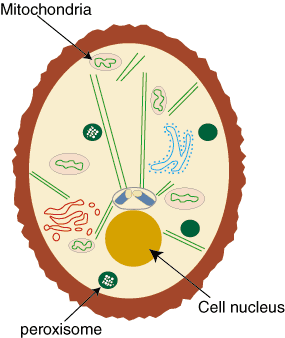
Palentologists and Population Geneticists have discovered and confirmed that our human ancestors originated on the dark continent. "A team of Genographic researchers and their collaborators have published the most extensive survey to date of African mitochondrial DNA (mtDNA). " The genetic material of the mitochondria, or powerhouse of the cell, is high conserved and has a very low mutation rate compared to nuclear or regular DNA. When sperm and egg unite, they each bring their fair share of nuclear DNA - 23 chromosomes. 22 Somatic or body chromosomes and 1 set of sex chromosomes to determine the gender of the baby. The chromosomes are the packages of ALL of your genes. Both the egg and sperm are single cells, but the egg, which is a bit larger than the sperm, also houses other cell organelles, including the mighty, mighty, mitochondria. So if you did a cheek swab, a la Maury Povich style, your mitochondrial DNA is exactly your mom's so on down the line.

"Mitochondrial DNA, inherited down the maternal line, was used to discover the age of the famous 'mitochondrial Eve' in 1987. This work has since been extended to show unequivocally that the most recent common female ancestor of everyone alive today was an African woman who lived in the past 200,000 years. Paleontology provides corroborating evidence that our species originated on this continent approximately 200,000 years ago."

So this backward game of chasing down the mtDNA has to deadline somewhere - that's to mitochondrial Eve. But the researchers found that there are 2 dead ends. Both deadline on the African continent, but separated geographically - eastern and southern Africa - and over many tens of thousands of years.

Check out the full article on ScienceBlog: Humanity nearly split in two, study finds

Wednesday, April 2, 2008

Framing Science - so you can understand

I was reading though The Intersection and came across this list kind of explains the importance of Framing Science. This is a big deal to me. Sharing science with under-represented and under-served audiences is my focus. I am especially committed to African-American audiences (regardless of SES). The truth is, most Americans are scientifically illiterate. But, I have found that regardless of economic, political, social or even educational status, most African-Americans are not very scientifically literate. That's scary, because even within other demographics, things shake out across SES lines. So this signals a great need to provide across the board attention to the whole demographic.

Here is a part of the post from that blog that lists 8 issues related to Framing Science. Emphasis and comments in colored text are mine.

1. We have long-running politicized science controversies on subjects like evolution and climate change, with separate polarized camps and the repeated use and misuse of complex scientific information in the arguments. Yes, to true. The African-American community does have some experience with the evolution issue and right now, most are out of the climate change and environmental game. We are consistently late on adding out 2 cents in on global issues that aren't specifically "black issues". I have peeves with this, see previous post. Back to the evolution issue. Like most Americans, Black Americans are largely confused about this scientific concept and most of what people think they understand comes from equally uninformed church leaders and other cognitive novices.

2. Wonks and science enthusiasts--and ScienceBloggers!--can parse these arguments. But most members of the general public are unlikely to grasp the fine scientific details, and--having neither the time nor the interest to deeply inform themselves about them--are more likely to make up their minds about these complex issues in the absence of real detailed knowledge about them. So true. I feel the same way about the economic news and the Bloomberg report. Like I care to know all of the caveats and nuances. But, I recognize there are caveats and nuances. So, I don't take that for granted when I do hear/read economic news. The point here is that I understand that people don't want or need all of those details. The trick is to inform them without boring them or oversimplifying the info.

3. Rather, these members of the public will rely on cues, cognitive shortcuts, and sources of information that may not be scientific--e.g., church leaders, neighbors, Fox News. They will use these information sources, in combination with their partisan, ideological, or religious backgrounds, to make up their minds. I co-sign, see my comment for #1. One big issue is the fact that most people (especially Blacks) don't have any 'science authorities or leaders' they can quote. So, it is hard to refute the arguments if you have no one (whom everyone may also be able to relate to) to quote as saying, "this is the way it is" or offer people another way to look at things. Overall, better Science PR is needed to elevate the status if science and science professionals in the African-American community.

4. Furthermore, in the fragmented media system, many members of the public can opt out of receiving high quality scientific information entirely--and often do. They can just turn the channel. They can watch the Food Network. or BET. Gotta love free-market system. I've made comments on this topic of framing before, see previous post.

5. Therefore, if--if--you want to get beyond audiences of science enthusiasts who understand the fine details, and move this broad public on these highly complex and politicized issues, you have to do more with your communication strategy than simply informing people about the details of science. I agree and that's the hard part. Though this is something I want to do, I struggle with it.
For one, scientists are trained to provide the information, not shape your opinion. I think it is an Achilles heal of the profession. "Let the results speak for themselves" is a common quote. Interpret results, but don't go too far. Most scientists are careful about over-stepping or making too much out of something. It's considered inappropriate to overstate the importance or impact of your results. Conservatism. Hmmm, what to do? Because the other side has NO problem explaining inferences and guesses as fact.

6. Rather, you have to pare down these highly complex issues--or "frame" them--selectively highlighting just those aspects of the issue that will resonate with the core values of the particular audience (and there are different audiences, of course, and different frames will work for them). Working on that.


7. Furthermore, you have to reach a given audience through the media outlets it is actually going to--and that will often not be scientific media, ScienceBlogs, etc. True. Meet people where they are. But here is the rub. Blogging maybe a special case. Though the internet is popular, many black people I know (in the real world) largely underutilize the internet and it's related technologies. With the exception of email, texting, mobile phone calls, and entertainment (music, videos, you tube and celebrity gossip) most are clueless. For example, they may have heard the term blog, but don't know what it is, how to use it and definitely don't comprehend the power of it. I often break news to my friends and they are always shocked and say "how did you know that?!" So, despite LOVING the internet and blogging, to meet my audience where it is means - the TV, the radio, and "ghetto newspapers". Sorry EBPs, I've got to try to reach our other brethren, too.

8. All of this leads to the following conclusion: With various types of intensive (and expensive) research--polling, focus grouping, media research, frame analysis, etc--it ought to be possible to come up with a communication strategy that should work on a given scientific issue. However, these strategies will often not involve talking about the technical details of science. Often, it will be important to emphasize other aspects of the issues--moral, economic, and so on. I'm working on this, too. Wish me luck. Better yet, let me know when I'm 'relating' to you.

Thanks,
Stay informed.